
Guida ai Tappeti
Rug Restoration in Milan: Assessing Damage, Costs and Repairs

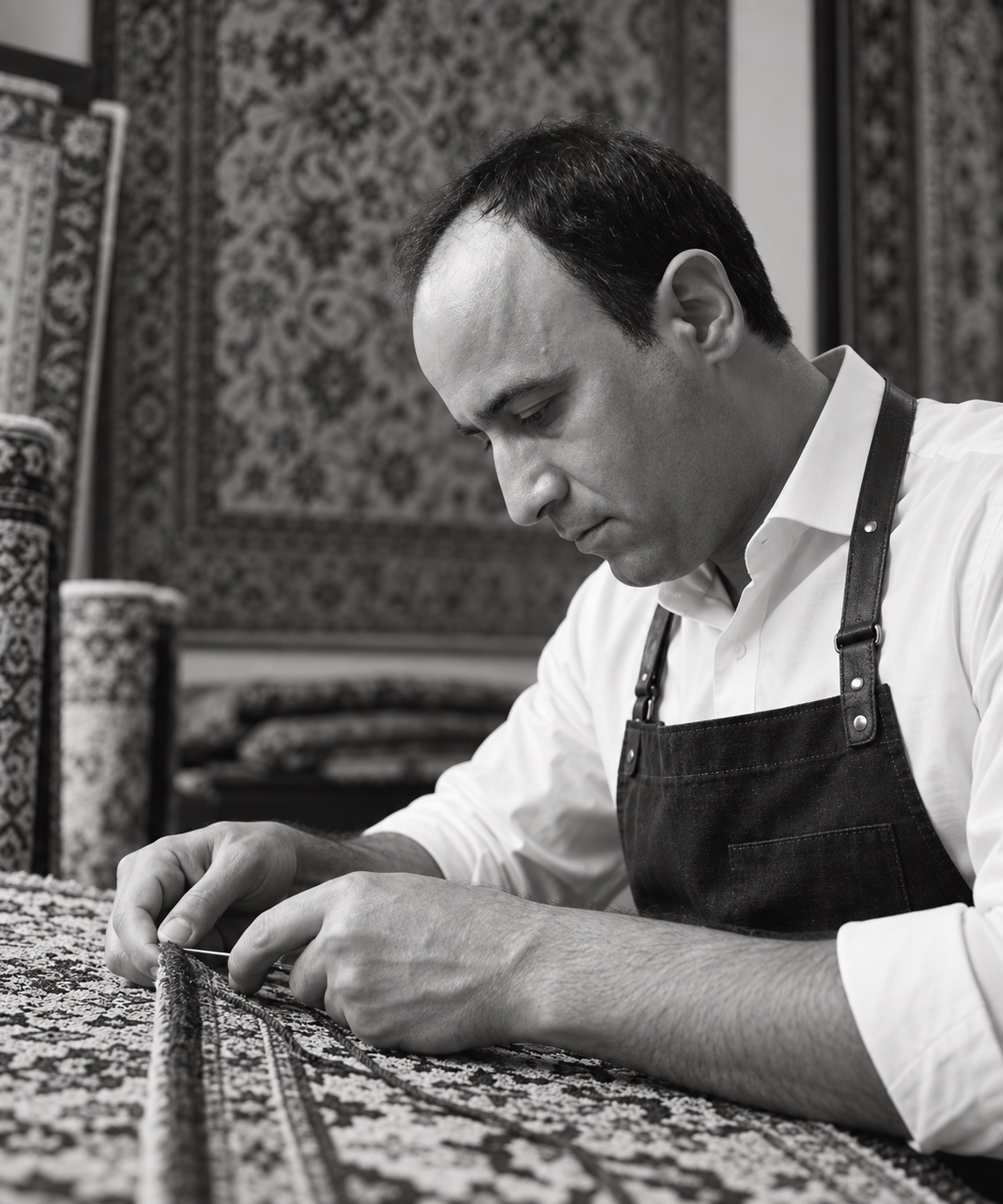
An opening edge, small tear or thinning area deserves attention before the damage spreads. Looking for rug restoration in Milan starts with understanding what is happening to your rug and what outcome is realistic.
Ask not only “What will it cost?” but also “What work is needed, and why?” Conserving an antique textile, making a household rug usable and reconstructing a missing section are different goals.
Surface wear or structural damage?
A worn pile is not necessarily a hole. In some areas the pile may be low while the foundation remains intact; elsewhere the threads supporting the knots or weave may be broken.
Photograph the affected area and the back, without pulling threads or opening a tear. If material is coming away or the rug is disintegrating, limit foot traffic and ask for advice before vacuuming or handling the fragile area.
Which treatments may be appropriate?
The solution depends on construction and the position of the damage. Options include stabilising an edge, repairing a tear and, where appropriate, reconstructing a missing section.
- Stabilisation: contain deterioration and secure a fragile area.
- Functional repair: improve usability within the limits of the rug’s overall condition.
- Reconstruction: replace a missing area using agreed materials, technique and appearance.
More extensive work is not always better. For an antique or collectible rug, ask how its initial condition will be documented and which original parts will be preserved. Agree the objective before work starts.
What determines restoration cost?
Two equally sized areas of damage can require very different amounts of work. Construction, knot fineness, materials, pattern complexity and access to the damaged area all matter. Previous repairs may also require closer examination.
Request a quotation that describes the work. For reconstruction, discuss achievable colour matching and whether the repair will remain visible close up. Restoration does not automatically increase resale value.
Repair or replace?
Consider the treatment cost, overall condition, intended use and sentimental value together. An inherited rug may merit repair for personal reasons even if the expense would not be recovered on resale.
If the foundation is weak throughout, repairing the visible hole alone may not address the problem. Ask about alternatives such as reducing use, changing its location or choosing limited conservation work.
Clean before or after restoration?
There is no universal sequence. Structure and soiling can change the order of treatment. Disclose stains, moisture and previous treatments at the first assessment.
Avoid glue, adhesive tape and improvised stitching. These can complicate later work. Ask how to support and transport a fragile rug before moving it.
Prepare your assessment request
Send a full photograph, a view of the back and close-ups with a size reference. Explain when you noticed the issue, whether it is spreading and any water damage or previous repairs.
Explore our rug repair and restoration service in Milan, then contact us with the damage and your desired outcome. For damaged ends, read when to repair or reweave fringes. For distortion without tears, ask about professional reshaping.
Frequently asked questions
Can a small hole wait?
It depends on thread condition and use. Reduce stress and request an assessment, particularly if the damage is growing.
Will a repair be invisible?
That cannot be promised in every case. Materials, colours, wear and technique affect the result.
Can modern rugs be restored?
Suitability depends on construction and damage, not age alone. A modern rug also needs assessment first.